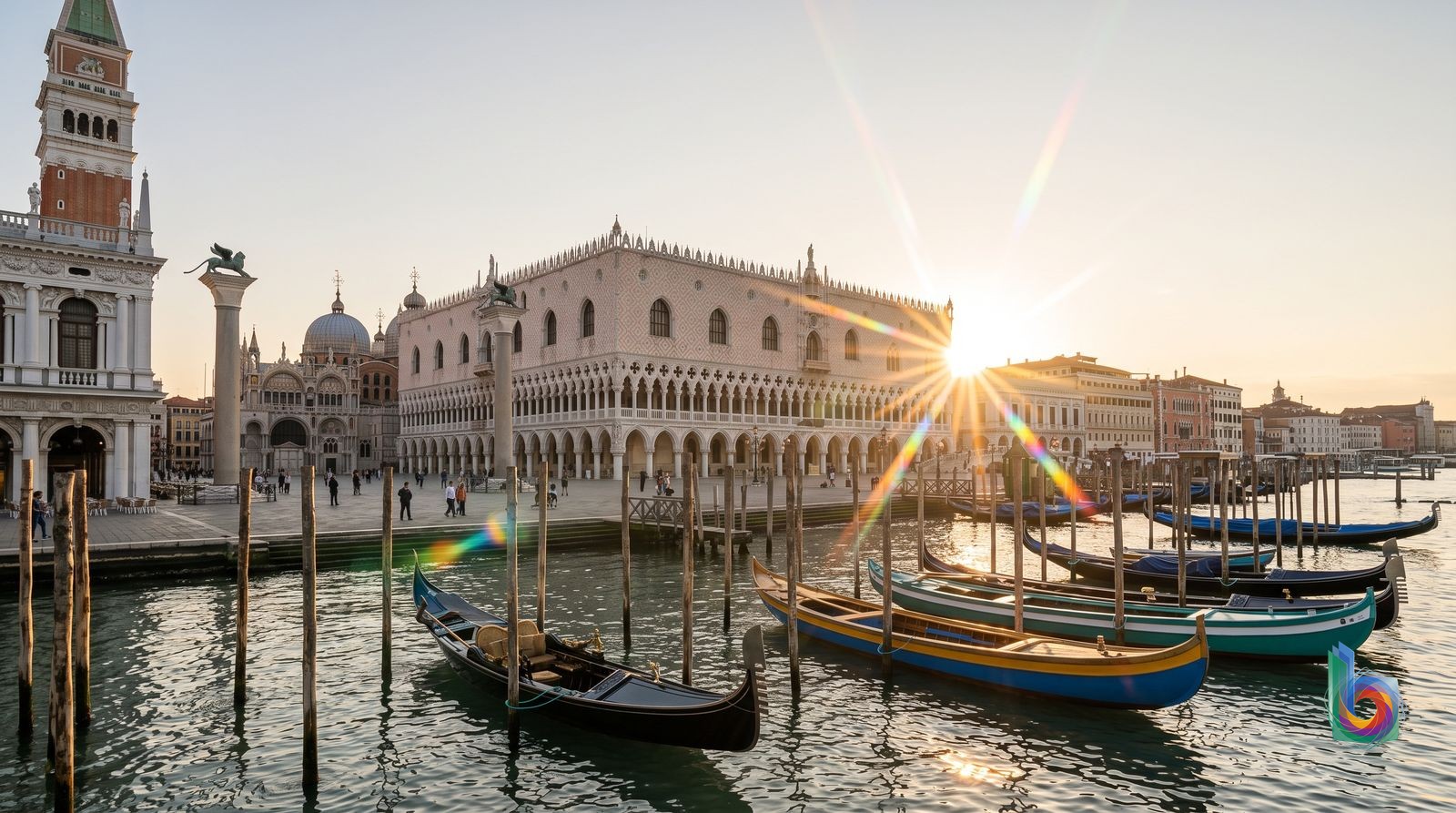
First visit? Stay in San Marco.
For a first visit, San Marco earns the default despite the price and crowds: St Mark’s Basilica, the Doge’s Palace, the piazza and lagoon frontage are at your door, and S. Marco/S. Zaccaria is one of the most useful vaporetto hubs. Stay here if seeing the icons early and late outweighs a quieter, better-value neighborhood; choose Rialto and San Polo or Dorsoduro if it does not.
luxury →
The ceremonial heart of Venice has the grandest sense of occasion, immediate access to the headline sights and excellent boat connections from S. Marco/S. Zaccaria. Pay for a hotel on a quieter side street rather than directly on the busiest piazza approaches.
value →
Cannaregio is usually a more realistic island base than San Marco: residential texture, good eating, the Jewish Ghetto, and straightforward access to Santa Lucia station and Grand Canal boats. It is less convenient for popping back from the eastern sights, but it feels more lived-in.
family →
It balances practical rail access, a calmer neighborhood rhythm and enough restaurants and services without requiring a boat every time you want to return to the hotel. Choose a deeper residential lane, not the station-facing strip; far-northern addresses add walking.
nightlife →
Dorsoduro has Venice’s most reliable evening energy around Campo Santa Margherita, plus bars and a younger crowd, while Zattere and Accademia keep the rest of the district connected. This is Venice nightlife, not a clubbing capital, and light sleepers should stay away from Campo Santa Margherita itself.
quiet →
Giudecca gives you waterfront space, lagoon views and a genuine break from the central crush. It suits travelers content to plan around vaporetto rides; it is a poor choice if being able to walk home after dinner in San Marco or Dorsoduro is essential.
rail-day-trips →
For early trains, airport-bus arrivals, or day trips beyond Venice, Santa Croce minimizes luggage misery: Piazzale Roma is here and Santa Lucia is just across the Grand Canal. The trade-off is that it is practical rather than the most cinematic place to wander at night.
return-visitor →
Castello rewards travelers who have already done the headline circuit. Stay west for easier access to San Marco and S. Zaccaria, or farther east for quieter, more residential streets and Biennale/Arsenale territory. The eastern end is peaceful but walking-heavy.
Avoid sleeping near The Piazzale Roma edge of Santa Croce: Book here only when arrival logistics are the point. It is bus, tram and car infrastructure rather than the canal-and-campo Venice most visitors expect, and the immediate blocks are busy by day with comparatively little evening atmosphere.
Avoid sleeping near The immediate Ferrovia/Santa Lucia station-facing strip in Cannaregio: Cannaregio is an excellent base, but its station frontage is its most functional and crowded section. It attracts luggage traffic and pickpockets; go a few canals inland for the neighborhood’s better character.
Avoid sleeping near Around Campo Santa Margherita, Dorsoduro: Excellent for bars and late socializing, but a poor sleep bet for noise-sensitive travelers. Wikivoyage also specifically advises extra care here in the evening and at night; choose Zattere or a quieter Dorsoduro lane if you want the district without the late-night spillover.
Avoid sleeping near Burano as an overnight base for a first or short Venice trip: Burano is a fine daylight outing, not a convenient substitute for central Venice. Its colorful lanes are crowded by day, dining and evening choices thin out afterward, and every major sightseeing plan depends on a lengthy vaporetto connection.
The neighborhoods
Pick the areas you want to be around — the hotels and tables below narrow to them.
Stay here Fine base Visit, don't sleep
San MarcoFirst-timer default
Icons, crowds, and maximum convenience
This is Venice’s ceremonial core: St Mark’s Basilica, the Doge’s Palace, the Campanile and the lagoon-facing piazza are all here. It is unapologetically crowded and expensive, but for a first visit the ability to step outside early or late and have the big sights on your doorstep is genuinely valuable.
Vs. others: Pick San Marco over Dorsoduro if this is your first Venice trip and the headline monuments matter most; pick Dorsoduro if you want a more lived-in evening and better odds of escaping the crush.
The S. Marco/S. Zaccaria stops are a major lagoon hub. Line 1 connects along the Grand Canal to Rialto, Ferrovia and Piazzale Roma; Line 2 also links S. Marco with Giudecca, Zattere, Rialto and Piazzale Roma. Rialto is walkable, but Venice’s bridges and maze make distances feel longer with luggage.
Best for: first-timers, luxury, short stays, travelers prioritizing landmark access
Piazza San Marco and its approaches can be intensely crowded, especially in daytime and cruise-heavy periods. · Restaurants immediately around the main sights are where travelers are most likely to encounter mediocre, overpriced tourist menus. · Accommodation is among the city’s priciest. · Acqua alta can affect low-lying routes around the piazza in colder months.
See hotels in San MarcoRialto and San PoloExcellent base
Market lanes, Grand Canal, central living
San Polo is one of Venice’s oldest quarters, with the Rialto Bridge and market area at its northern edge. Away from Rialto it quickly becomes a compact web of churches, small campos and residential lanes: central without being entirely given over to monuments.
Vs. others: Pick Rialto and San Polo over San Marco if you want to be equally central but less tied to the landmark circus; pick San Marco if waking beside St Mark’s is worth the premium.
Rialto is on Grand Canal Line 1, while Line 2 serves Rialto and reaches S. Tomà; the rest of San Polo is primarily on foot. It is an easy walk to San Marco and across the canal to Cannaregio, but hauling bags through narrow lanes and over bridges is not easy.
Best for: first-timers, foodies, couples, travelers who want centrality without San Marco
Rialto Bridge and the market approaches are among Venice’s busiest choke points. · Some lanes near the bridge are heavy on souvenir shops and tourist-oriented restaurants. · Hotel access can involve multiple bridges from the nearest vaporetto stop. · Pickpocket risk is highest in dense visitor crowds.
See hotels in Rialto and San PoloCannaregioExcellent base
Residential Venice with strong transport
Cannaregio stretches from the station through broad canal-side routes into quieter residential streets, including the historic Jewish Ghetto. It is one of the most practical places to sleep on the islands: atmospheric, less stage-set than San Marco, and close to arrival points without being merely a station district.
Vs. others: Pick Cannaregio over Santa Croce if you want a neighborhood with more evening life and character; pick Santa Croce if minimizing the walk from bus, tram or car matters more.
Venezia Santa Lucia is at Cannaregio’s southern edge. Ferrovia and Guglie/tre Archi-area stops make vaporetto connections straightforward; Line 1 runs from Ferrovia down the Grand Canal toward Rialto, San Marco and Lido, and Line 2 also serves Ferrovia. San Marco is walkable but not next door.
Best for: value, families, return visitors, foodies, rail-day-trips, quiet seekers
The station-facing strips are busy, functional and less charming than deeper Cannaregio. · The Jewish Ghetto and popular canal routes are no longer secret; expect visitors by day. · Far-northern addresses can feel inconvenient after a full day of sightseeing. · Crowded transit nodes attract pickpockets.
See hotels in CannaregioDorsoduroExcellent base
Art, students, canals, slower evenings
Dorsoduro combines heavyweight art—the Gallerie dell’Accademia and Peggy Guggenheim Collection—with university energy around Campo Santa Margherita and calmer waterside walks along the Zattere. It feels more like a place to spend an evening than San Marco, though it is not remotely undiscovered.
Vs. others: Pick Dorsoduro over San Marco for galleries, a less tourist-saturated base and livelier local evenings; pick San Marco if the major monuments and shortest walks to them are the priority.
Accademia and Zattere provide useful water access; Line 2 runs via Zattere and Accademia toward S. Marco, Rialto, Ferrovia and Piazzale Roma. The Accademia Bridge makes San Marco walkable, while the western end is closer to Piazzale Roma.
Best for: art lovers, foodies, couples, return visitors, value travelers, nightlife
Campo Santa Margherita can be noisy late, and Wikivoyage specifically advises care there in evening and night hours. · The Accademia Bridge corridor is crowded in the daytime. · Some accommodation involves bridge-heavy walks from the nearest stop. · The student-and-bar scene is localized rather than citywide nightlife.
See hotels in DorsoduroCastelloExcellent base
Palaces west, quiet lanes east
Castello is Venice’s long eastern sestiere. The western end beside San Marco has major sights and a steady visitor flow; farther east, the streets become noticeably more residential and calmer, with the Arsenale and Biennale-oriented Venice rather than souvenir Venice.
Vs. others: Pick Castello over Cannaregio if you want to be nearer San Marco while retaining quieter residential streets; pick Cannaregio if rail arrivals and Grand Canal connections matter more.
S. Zaccaria at Castello’s southwest edge is one of the best-connected stops, served by Lines 1 and 2 among others. Western Castello is an easy walk from San Marco; eastern Castello is walkable but can feel a long way from the station and Rialto.
Best for: return visitors, families, quiet seekers, culture travelers, travelers seeking relative value
The farther east you stay, the more walking you will do—especially with luggage. · The western fringe inherits San Marco’s crowds and tourist dining. · Some streets are very quiet at night, which can feel isolated rather than romantic for solo travelers. · Navigation is easy to underestimate in the long, irregular eastern end.
See hotels in CastelloSanta CroceAcceptable base
Arrival-friendly, practical, understated Venice
Santa Croce is the working gateway of island Venice: Piazzale Roma brings in buses, cars and tram passengers, while the Grand Canal edge is close to the railway station across the bridge. It has handsome canals, churches and a small park, but fewer must-see sights and less evening buzz than the central sestieri.
Vs. others: Pick Santa Croce over Cannaregio if arrival and departure logistics are your chief concern; pick Cannaregio if you want a more atmospheric neighborhood after you have checked in.
This is the island’s most convenient base for Piazzale Roma and its bus/tram arrivals; Venezia Santa Lucia is just across the Grand Canal. Line 1 and Line 2 connect Piazzale Roma with the Grand Canal, Rialto, San Marco and other districts. San Marco is walkable but not close.
Best for: rail-day-trips, families, travelers with heavy luggage, short stays, value-minded travelers
Piazzale Roma is transport infrastructure, not the Venice people imagine when booking a lagoon hotel. · The area is quieter and thinner on destination restaurants and nightlife. · The most convenient blocks can feel busy with arrivals by day. · A stay here trades atmosphere for practicality.
See hotels in Santa CroceGiudeccaAcceptable base
Waterfront calm across the canal
Giudecca sits directly opposite Dorsoduro across the broad Giudecca Canal. It offers long waterfront views, more breathing room and a distinctly separate rhythm, but that separation is real: every central sightseeing day begins and ends with a boat.
Vs. others: Pick Giudecca over Dorsoduro if peace, water views and a retreat-like base matter more than walkability; pick Dorsoduro if you want to stroll home from museums, bars and central sights.
Line 2 runs through the Giudecca Canal, linking S. Zaccaria, Giudecca, Zattere, Tronchetto, Piazzale Roma, Ferrovia and central stops; walking to San Marco is not an option because the canal separates the island from the historic core. Night Line N also follows the main night corridor toward Lido and Piazzale Roma.
Best for: quiet seekers, families, return visitors, travelers wanting lagoon views, travelers comfortable using boats
You are dependent on vaporetto service, including after dinner or a late arrival. · It can feel too quiet for travelers expecting lively Venice at night. · A missed boat is more consequential here than in any central sestiere. · The broad canal is beautiful but is not the intimate small-canal Venice some first-timers picture.
See hotels in GiudeccaLidoAcceptable base
Beach island, not central Venice
Lido is Venice’s long, narrow beach island: a sensible change of pace in warm weather and a comparatively affordable place to sleep, but not an extension of the walkable historic center. Its appeal is beach time, space and the journey across the lagoon—not immediate access to every church and museum.
Vs. others: Pick Lido over Giudecca if a beach and more open space are part of the trip; pick Giudecca if you want a quieter island base that is much closer to the historic center.
Line 1 runs between Piazzale Roma, Ferrovia, Rialto, S. Marco/S. Zaccaria and Lido; Line N provides overnight service on the Lido–Grand Canal–Piazzale Roma corridor. Central Venice requires a vaporetto, then walking.
Best for: families, beach travelers, budget travelers, summer visitors, quiet seekers
The commute makes spontaneous returns to the hotel inconvenient. · Outside beach season, it can feel subdued rather than atmospheric. · It is not the place to stay if your ideal Venice evening means simply wandering home from Rialto or San Marco. · Wind and weather can make the exposed island feel harsher than the sheltered lanes of the historic city.
See hotels in LidoMuranoAcceptable base
Glass island with a local rhythm
Murano is a separate island known for its glassmaking, workshops, shops and canals. It is a worthwhile visit and can be a calmer, sometimes better-value sleep than central Venice, but much of its visitor economy is built around glass retail and it lacks the historic center’s all-day density of sights.
Vs. others: Pick Murano over Cannaregio if calm and glassmaking interest outweigh central convenience; pick Cannaregio if you want restaurants, rail access and easy walks to the major sights.
Murano is reached by vaporetto rather than on foot from the main islands; it is well suited to a daytime excursion, but sleeping here means using boats for San Marco, Rialto, the station and evening plans. Check current ACTV routing because vaporetto service patterns can change.
Best for: return visitors, quiet seekers, craft lovers, value-minded travelers, families
Glass shops can feel repetitive, and not every storefront offers the same level of craft or value. · You lose the ability to wander home through central Venice after dinner. · Nightlife and dining choice are limited compared with the main city. · Boat timetables, rather than your feet, shape your day.
See hotels in MuranoBuranoVisit, don't sleep
Colorful, remote, best as daylight
Burano’s brightly painted small houses make it one of the lagoon’s most photogenic islands, and it has a small-island, artist-friendly character. That visual payoff is real, but it is far from the historic center and is better treated as a deliberate half- or full-day outing than a default hotel base.
Vs. others: Pick Burano over Murano if colorful streets and a slower lagoon outing appeal more than glassmaking; pick Murano if you want a closer, more practical island visit or overnight option.
Burano is reached by vaporetto and is substantially farther out in the lagoon than the central sestieri; it is not walkable to Venice’s main sights. Build the boat journey into the day rather than treating it as a quick side street from San Marco.
Best for: photographers, families, return visitors, slow-travelers
The colorful center is heavily visited during the day despite its small scale. · It is impractical as a base for repeated trips to the historic center. · Dining and evening options are limited once day visitors depart. · Bad weather or a delayed connection has more impact here than in central Venice.
See hotels in Burano


