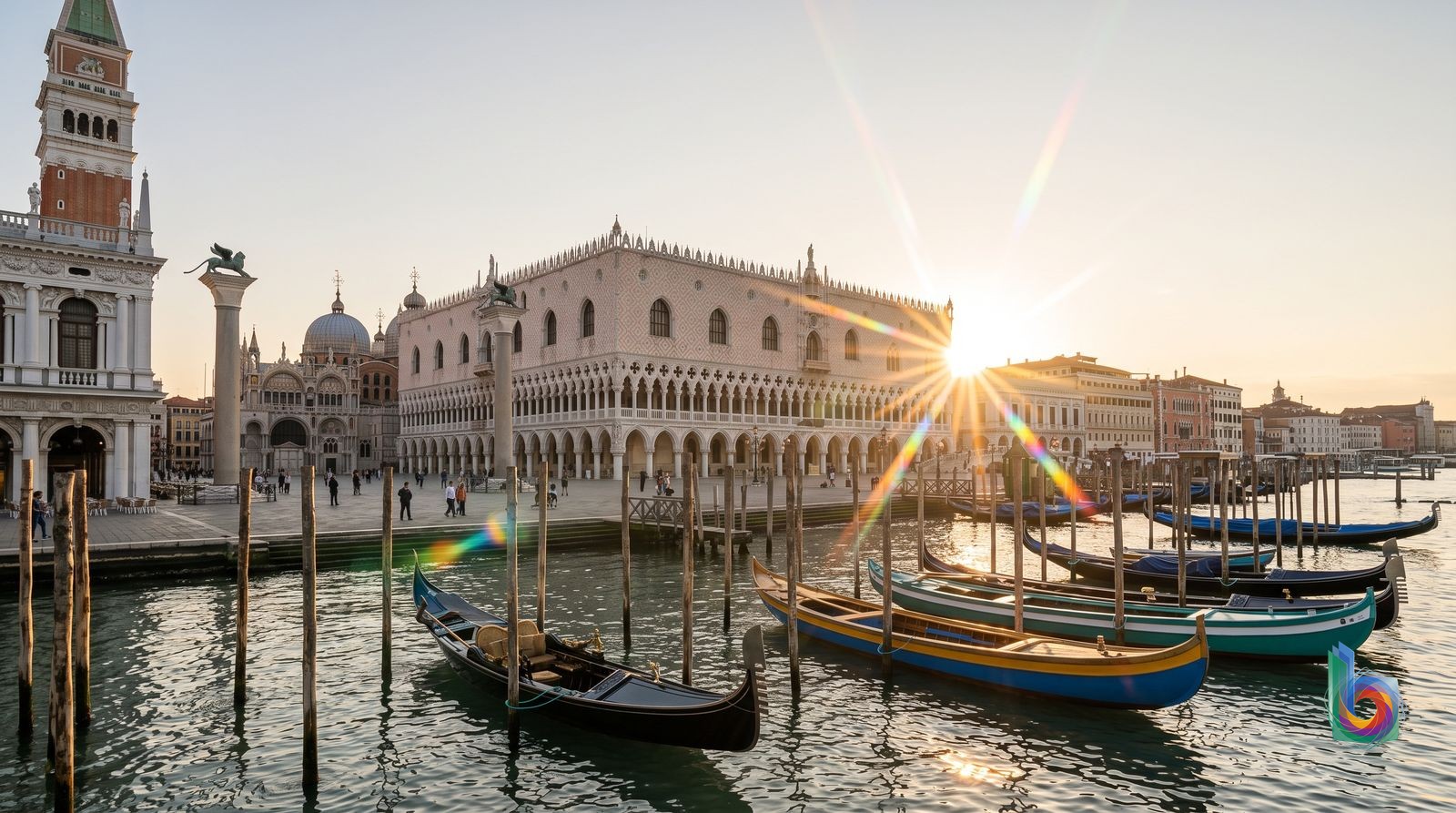
Season by season
January–March
The quietest broad stretch, with chilly, damp, windy and sometimes foggy weather. From roughly November through winter, high tides (acqua alta) can temporarily flood low-lying routes, particularly around San Marco.
Shorter daylight, less reliable weather and possible high-water disruption. Carnival can abruptly erase the low-season price and crowd advantage.
April–May
One of Venice’s best weather-and-daylight windows: generally more comfortable for walking and outdoor time, though the city is never truly quiet.
This is popular season, so St Mark’s Basilica, Doge’s Palace and the Campanile need advance planning; major Biennale opening periods can further raise demand.
June–August
Hot, humid, mosquito-prone and packed. Long days help with sightseeing, but dense lanes, bridges and crowded vaporetti make the heat feel more tiring.
The worst combination of heat, humidity and crowds, with high accommodation demand. Book key sights and any La Fenice performance well ahead.
September–October
Early-to-mid autumn is another strong compromise of temperature and daylight, with more manageable conditions for walking than high summer. Venice remains busy, especially in early September.
The Venice Film Festival on the Lido and Biennale-related dates can push up prices and reservations; by later autumn, weather becomes less dependable.
November–December
Cooler, damper, windier and often quieter, with winter high-tide risk beginning again. Fog and subdued light can be striking, but conditions are not reliably pleasant.
Acqua alta may affect low routes, especially around San Marco; daylight is short and outdoor plans need flexibility. Christmas and New Year can still raise demand.
Events worth planning around
Venice Carnival · Usually February, sometimes extending into early March; dates vary with Easter.
A major crowd and price distortion: reserve accommodation much earlier than usual and prebook core sights. Venice’s normal winter quiet disappears during the main Carnival period.
Venice Film Festival · Usually late August to early September, on the Lido.
Hotels and transport demand rise, especially around the Lido and during headline screening dates. Book lodging early if attending or if your Venice stay overlaps the festival.
Venice Biennale openings · Major opening periods vary by the Biennale calendar; art and architecture programming follow alternating cycles.
Opening dates draw international visitors and can materially increase hotel prices and booking pressure. Check the official Biennale calendar before fixing dates and allow a longer lead time for lodging and performances.
Getting around
Walking
Most journeys within the historic sestieri: San Marco–Rialto–San Polo, central Cannaregio, Dorsoduro and western Castello. It is the best way to absorb Venice and usually beats waiting for a boat on short hops.
Use an offline map but navigate by the yellow signs for Rialto, San Marco, Ferrovia and Piazzale Roma; addresses are unreliable as a primary tool because numbering restarts by sestiere. Allow far more time with luggage: bridges, steps and stone paving turn short map distances into work.
There are no hills, but bridges are the real obstacle. Walking stops being efficient in far-eastern Castello, far-northern Cannaregio and between Giudecca or Lido and the main city. San Marco and Rialto can also become slow-moving crowd corridors; high water can disrupt low routes around Piazza San Marco in winter.
ACTV vaporetto
Longer cross-city trips, saving tired legs, and all journeys to Giudecca, Lido, Murano and Burano. Line 1 is the scenic Grand Canal ride via Rialto, Ferrovia and San Marco; Line 2 is usually the faster workhorse for the Grand Canal/Giudecca circuit.
Board at the stop nearest your hotel rather than planning around a straight-line map pin. Ferrovia serves the station, Piazzale Roma is the bus/tram gateway, and S. Marco/S. Zaccaria is the major eastern hub. Validate and keep tickets as required; check the current ACTV timetable and routing for island services.
Line 1 is beautiful but often crowded and slow. Boats do not solve the last stretch: San Polo, deeper Dorsoduro, eastern Castello and far-northern Cannaregio can still mean bridge-heavy walks from a landing. On Giudecca, Lido, Murano and especially Burano, a missed boat matters much more because there is no walking alternative.
Night vaporetto (Line N)
Late returns along the main Lido–Grand Canal–Piazzale Roma corridor, particularly if sleeping on Lido or Giudecca and you cannot walk home from central Venice.
Treat it as a safety net, not a frequent metro substitute: look up the night timetable before dinner and know your last practical connection. Giudecca’s main night link follows this corridor toward Lido and Piazzale Roma.
Service is limited and gaps are consequential. It is least forgiving for Giudecca, Lido, Murano and Burano; the latter islands are poor choices for spontaneous late-night plans. In the central sestieri, walking is often simpler once boats thin out.
Water taxi
A deliberate splurge when your hotel has a usable canal landing, or when mobility needs, a large amount of luggage or an unusually awkward arrival justify door-to-door convenience.
Pre-arrange through a reputable operator or your hotel and confirm the exact drop-off point; many properties still require a walk and steps from the nearest accessible canal or landing.
It is vastly more expensive than the airport bus plus vaporetto. It is not a sensible everyday substitute for ACTV, and it cannot make narrow-lane hotels in San Polo, deep Cannaregio, Dorsoduro or eastern Castello truly doorstep-accessible.
Bus, tram, car and rideshare
Only the mainland approach: airport and mainland buses/trams terminate at Piazzale Roma, while trains reach Santa Lucia. These are useful for getting to the island, not for moving around it.
Change at Piazzale Roma to walking or a vaporetto. Do not drive into historic Venice; if arriving by car, park before the pedestrian city and travel onward on foot or by boat.
There is no metro and no road network in the historic city. Rideshare becomes irrelevant after Piazzale Roma, and bicycles are banned in the main city. Santa Croce is the easiest district for this transition; San Marco, Castello, Dorsoduro and the islands are not road-accessible.
Safety: Venice is generally safe, but guard your phone, wallet and passport at Rialto, San Marco and crowded vaporetto stops, and check acqua alta forecasts in winter because low-lying routes can temporarily flood.
Book before you land
St Mark’s Basilica: reserve an official timed entry in advance, especially April–October and around Carnival. It is Venice’s most queue-prone essential sight. · Doge’s Palace: prebook a timed official ticket in busy periods; book the Secret Itineraries tour well ahead because its guided places are limited. · St Mark’s Campanile: reserve ahead for a specific sunset or midday slot in high season; it is the straightforward panoramic view and therefore gets swamped. · Clock Tower (Torre dell’Orologio): book ahead whenever it is operating visits; access is guided and capacity is inherently small. · La Fenice: book opera, ballet or a major concert as soon as your dates are fixed. A theatre visit is less urgent than a performance ticket. · For peak-season travel, secure the Basilica, Doge’s Palace/Secret Itineraries and Campanile 2–4 weeks ahead; use a longer lead time for Carnival, major Biennale dates and any performance you actually care about.
- Venice is not just San Marco. Use the six sestieri—Cannaregio, Castello, Dorsoduro, San Polo, Santa Croce and San Marco—as your mental map; house numbers restart by sestiere and are not logically sequential. Plan by landmarks, not street numbers.
- Carry luggage, don’t drag it noisily over bridges and stone lanes if you can avoid it. The last stretch to almost every hotel involves steps and walking, so choose accommodation by its nearest vaporetto stop, not its pin on a booking-site map.
- Venice has tight behavior rules because the city is an inhabited, fragile monument: no swimming in canals, no sitting or picnicking on steps, bridges or monuments, and no walking around bare-chested or in swimwear. Fines can be substantial.
- Pickpockets work the crush points—Rialto, San Marco, vaporetto landings and packed boats. Keep phone, wallet and passport secured rather than in an open tote or back pocket; Venice is generally safe beyond that.
- Do not block narrow calle or bridges for photos. Keep right, cross bridges briskly, and step into a campo rather than stopping traffic on a passageway.
- If visiting only for the day on designated peak dates, check Venice’s Access Fee rules before travel; the evidence indicates peak-day day-trippers pay €5 online, while overnight guests are exempt but may still need to register. Verify the applicable calendar and procedure on the official city site before leaving home.
Worth leaving the city for
Padua (Padova)Full day; roughly 25–50 minutes by train each way from Venezia Santa Lucia, plus time to reach the historic centre.
The one clear swap for an extra Venice day: Giotto’s Scrovegni Chapel, the Basilica of St. Anthony and the world’s oldest botanical garden give it a concentration of serious art and history that Venice cannot duplicate. It is a real working city, not a lagoon souvenir stop. Reserve the Scrovegni Chapel if it is central to your plan.
VicenzaFull day; about 45–75 minutes by train each way from Venezia Santa Lucia.
Go for Andrea Palladio rather than generic ‘another Italian town’ sightseeing: the Teatro Olimpico, Basilica Palladiana and compact centre make this Veneto’s best architecture day. It beats a fourth or fifth Venice day for travellers who care more about buildings than canals. It is less atmospheric after dark and far less forgiving if Palladio means nothing to you.
The Dolomites (Cortina d’Ampezzo area)Very long full day; allow 10–14 hours door to door. Cortina is more than 3 hours each way by train-and-bus, or a couple of hours by car in favourable conditions.
This is the only genuinely different landscape within day-trip reach: alpine scenery rather than another historic northern Italian city. Do it only in clear weather and only if mountains are a priority; organised excursions are often the sensible one-day format. A rushed day will be mostly transport, and Venice deserves priority on a first visit.