
#1
Dolphins Beach
2 h
This is Cancún’s big, open Caribbean beach: broad sand, strong color, and no resort-development squeeze. Use it for an early swim and the classic Cancún sign/photo stop, but respect surf flags—the water can be rough.
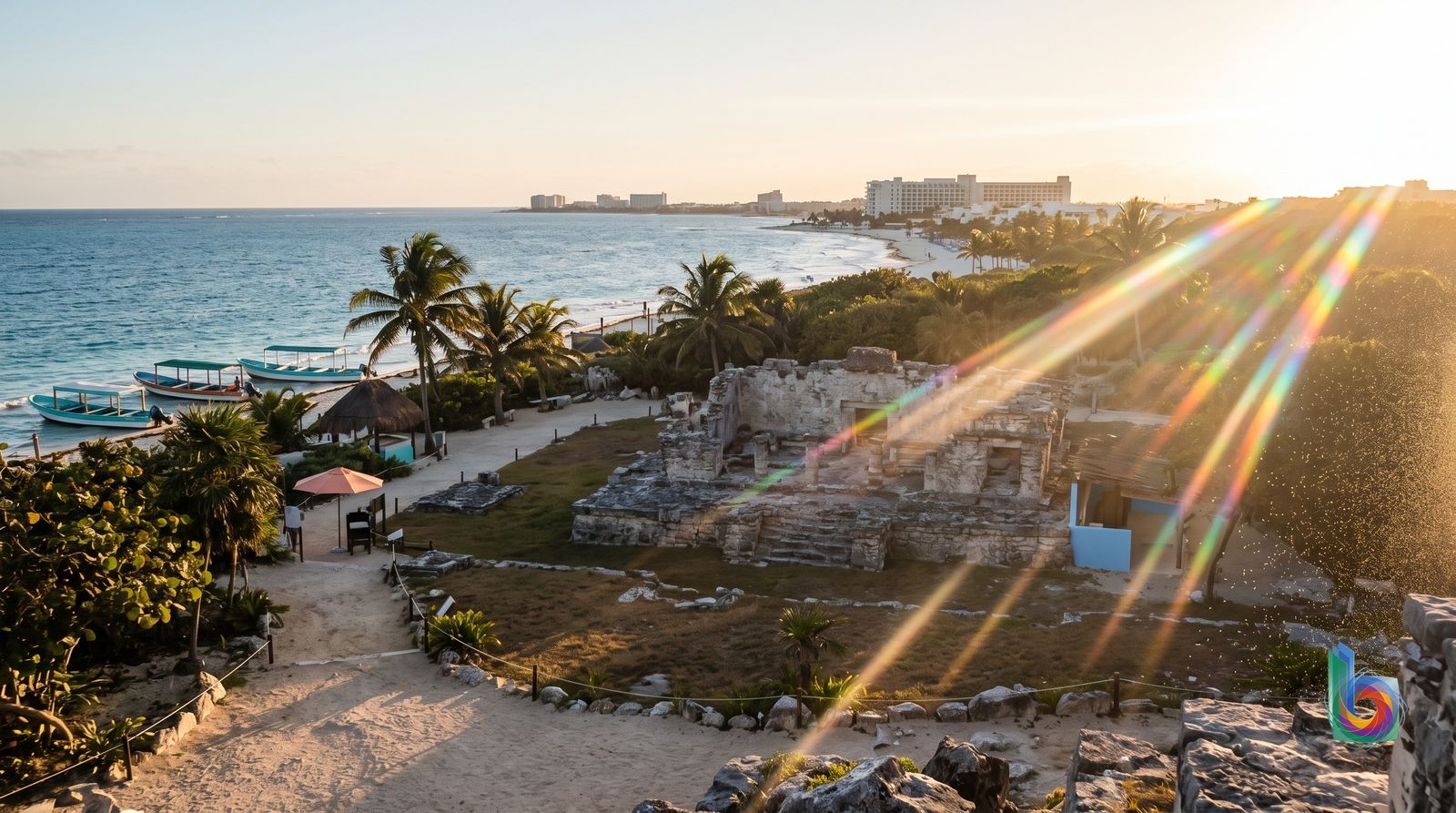
Cancún is a purpose-built Caribbean beach resort wrapped around a real, fast-growing mainland Mexican city: 22 km of white sand, turquoise water, all-inclusive towers, malls and nightlife on one side; working neighborhoods, markets and everyday restaurants on the other. The trap is treating either half as the whole story. The Zona Hotelera delivers the beach holiday efficiently but can feel like a heavily Americanized strip of resorts and sales pitches; El Centro is more lived-in and cheaper, but has no beach. Come for the sea, not for a preserved colonial city or a deep concentration of major Maya ruins—Cancún is a useful gateway to the wider Yucatán, not the archaeological main event.
The mental map
Think in two disconnected worlds. The Zona Hotelera is the narrow, 22-km, number-7/harp-shaped sandbar between the Caribbean and Nichupté Lagoon, organized by kilometre markers along Boulevard Kukulcán: Km 0 is near Av. Bonampak, Punta Cancún is around Km 9, and the southern end runs toward Punta Nizuc. El Centro sits on the mainland behind the lagoon, arranged in "supermanzanas"—roughly 400-metre superblocks—with Avenida Tulum as the principal north–south spine; Mercado 28 is a useful, if not official, reference point.
Pacing
Do not plan Cancún like a museum city. A realistic beach day has one anchor activity—morning at the beach, a short ruin or museum visit, or a lagoon/boat trip—plus dinner, because distances along Boulevard Kukulcán, heat, traffic and the spread-out hotel strip eat time. You can pair Museo Maya/San Miguelito with the south Hotel Zone, or a downtown wander with a beach stop, but trying to stack several paid attractions mostly means sitting in buses or taxis. Save full days for Isla Mujeres or farther-afield ruins.
Don't miss
2 h
This is Cancún’s big, open Caribbean beach: broad sand, strong color, and no resort-development squeeze. Use it for an early swim and the classic Cancún sign/photo stop, but respect surf flags—the water can be rough.

2.5 h
The museum gives needed context for the Maya sites visitors encounter across the peninsula, and San Miguelito adds a compact ruin walk under the trees. It is the best cultural counterweight to a beach-heavy Cancún stay; allow time for both the galleries and ruins.

10 h
Xcaret is a highly produced Riviera Maya eco-theme park combining river swims, wildlife exhibits, cultural programming, and a major evening show. It is expensive and consumes a full day, but it is one of the region’s defining resort experiences if that all-in-one format appeals.

4 h
The great Maya city is the peninsula’s essential archaeological day trip, with El Castillo and the Great Ball Court carrying a scale Cancún’s local ruins cannot match. Go with a guide or prepare beforehand so the long excursion is more than a photo stop.

7 h
A short ferry ride from Cancún, Isla Mujeres offers a slower island day with clear water, Playa Norte, and an easy change of pace from the Hotel Zone. Make it a full-day outing rather than trying to squeeze it around another major sight.
Where to stay
It is Cancún’s least-compromised first-trip base: proper Caribbean beach, the broadest practical mix of resorts and restaurants, and easy access to Punta Cancún’s nightlife without having to sleep in its loudest, rowdiest blocks. It is still a purpose-built resort corridor—expect tourist pricing and bus/taxi hops rather than a walkable Mexican neighborhood—but it makes beach days and first-time logistics simple.
Where to eat
Costs nothing
Make the days fit
1 day
Best for a first visit with only one full day: it pairs Cancún’s strongest cultural stop with its most dramatic public beach. The compromise is that there is no time for Isla Mujeres or a major mainland day trip.
Day 1 · South Hotel Zone: Maya context before the beach
Museo Maya de Cancún y Zona Arqueológica de San Miguelito → Dolphins Beach
2 days
The right pace for most short first trips: one grounded Hotel Zone day, then a full island escape. It sacrifices a big archaeological excursion, which needs its own long day.
Day 1 · South Hotel Zone: Maya context before the beach
Museo Maya de Cancún y Zona Arqueológica de San Miguelito → Dolphins Beach
Day 2 · Ferry day: a slower Caribbean island
Isla Mujeres
3 days
For first-timers who want Cancún’s sea and a serious Maya-site day trip, this is the fullest sensible version. It is excursion-heavy on day three, and it leaves out Xcaret because that expensive park also demands an entire day.
Day 1 · South Hotel Zone: Maya context before the beach
Museo Maya de Cancún y Zona Arqueológica de San Miguelito → Dolphins Beach
Day 2 · Ferry day: Isla Mujeres at island pace
Isla Mujeres
Day 3 · Full-day Maya capital excursion
Chichén Itzá
Safety: Obey beach flags and avoid swimming in rough or lightning conditions; after dark downtown, use a rideshare or taxi rather than walking isolated stretches, and keep cash and phones discreet.
Eat
For the most convincing food, leave the all-inclusive orbit at least once: Downtown Cancún’s central supermanzanas around Mercado 28 are the practical place for everyday Yucatecan cooking and cheaper local meals, while Avenida Nader–Bonampak is the better mainland pocket for a polished sit-down dinner or café. Mid Hotel Zone has the widest convenient resort-side restaurant choice, but it is expensive and tourist-facing; South Hotel Zone is largely a resort-meal proposition, and Punta Cancún is more useful for late-night energy than for culinary character.
Cochinita pibil: slow-roasted achiote-and-citrus pork, usually in tacos, tortas or panuchos, with pickled red onion and chile. · Panuchos and salbutes: small fried corn bases topped with turkey, chicken or cochinita; seek them for a casual Yucatecan meal rather than treating them as a beach-strip snack. · Sopa de lima, the fragrant Yucatán lime-and-turkey soup, especially worthwhile when you want a break from seafood and tacos. · Relleno negro and other Yucatecan recados (spice pastes): deeper, less instantly familiar regional cooking than the generic “Mexican” menus aimed at resort visitors. · Fresh Caribbean seafood—ceviche, grilled fish and shrimp—best approached as a simple lunch or early dinner; quality and value vary sharply on the Hotel Zone. · A full resort breakfast followed by a light seafood lunch is a common Cancún rhythm, but do not let an all-inclusive plan become the only version of local food you taste.
Before you go
Plan 4–5 nights for a proper first trip: two beach/resort days, one Isla Mujeres or lagoon day, and one full-day excursion or a slower downtown-and-beach day. Three nights works for a pure beach break, but do not try to cram several Riviera Maya attractions into it.
Stay in the Zona Hotelera if the beach is the point: it puts you on the Caribbean, near resort facilities, nightlife and the main Boulevard Kukulcán bus corridor. Stay downtown/El Centro for lower costs, local restaurants and easier ADO access, but accept that there is no beach and you will commute to it.
Punta Cancún and the mid-Hotel Zone are the easiest bases for restaurants, nightlife, malls and bus access, though they are the busiest and most Americanized. Choose the southern Hotel Zone toward Punta Nizuc for a quieter resort feel, but it is farther from downtown and central nightlife.
Book your hotel early for Christmas/New Year, Easter and March, and reserve major Riviera Maya parks in advance during those peak periods. Book whale-shark trips early in summer with a flexible operator; ordinary sights such as Museo Maya, El Rey and the Isla Mujeres ferry generally do not need panic-booking.
For downtown, take the official ADO airport coach to Terminal de Autobuses ADO Cancún, then continue by R-1/R-2 bus, rideshare or taxi. For a Hotel Zone resort with luggage, children or a late arrival, pre-book a shared shuttle; airport taxis are rarely the best value.
December through April offers the most dependable beach weather, but it is also the priciest and most crowded period; avoid March if you do not want spring-break noise. October–November can offer better value with fewer crowds, while June–September is hot, humid, wetter and carries hurricane and boat-cancellation risk.
No—not for a city-and-beach stay. Use R-1/R-2 buses along the Hotel Zone and Av. Tulum, plus rideshare or price-agreed taxis when needed; rent a car only for a deliberate self-drive trip outside Cancún.
Isla Mujeres is an easy dedicated day trip or overnight via ferry from Puerto Juárez, while Chichén Itzá is a long, tiring full-day outing rather than a quick add-on. Cancún is a convenient gateway, but travelers focused on Maya archaeology should consider an overnight nearer Chichén Itzá rather than treating a tour from the beach zone as effortless.
The beaches are public in principle, but resort entrances and facilities are not automatically open to non-guests, so use recognized public access points. Obey beach flags: the Caribbean can have strong currents, many public beaches lack lifeguards, and everyone should leave the water immediately during lightning.
Ready to go?
Plan a journey to Cancún
Start with this city already set as a chapter.
Quintana Roo · Mexico
Right now
Open to travelers · localized organized-crime violence and unrest in some states
Obey beach flags and avoid swimming in rough or lightning conditions; after dark downtown, use a rideshare or taxi rather than walking isolated stretches, and…
Check for your passportDestination profile
Worth knowing
 Tacos La Carne Al CentroTaco restaurant, Brewpub · $200–3004.7 · 197 reviews
 POLLERÍA DON KICHOChicken restaurant · $100–2004.6 · 386 reviews
 Cockteleria La Nueva Imagen AlvaradeñaSeafood restaurant · $200–3004.5 · 2,079 reviews
 TACOS YEYO'STaco restaurant, Fast food restaurant · $100–2004.5 · 1,062 reviews
 Antojitos Yucatecos EL PANUCHITOMexican restaurant · $1–1004.5 · 996 reviews
 Bromelia CancúnRestaurant · $200–3004.5 · 693 reviews
Good to know
Good to know


