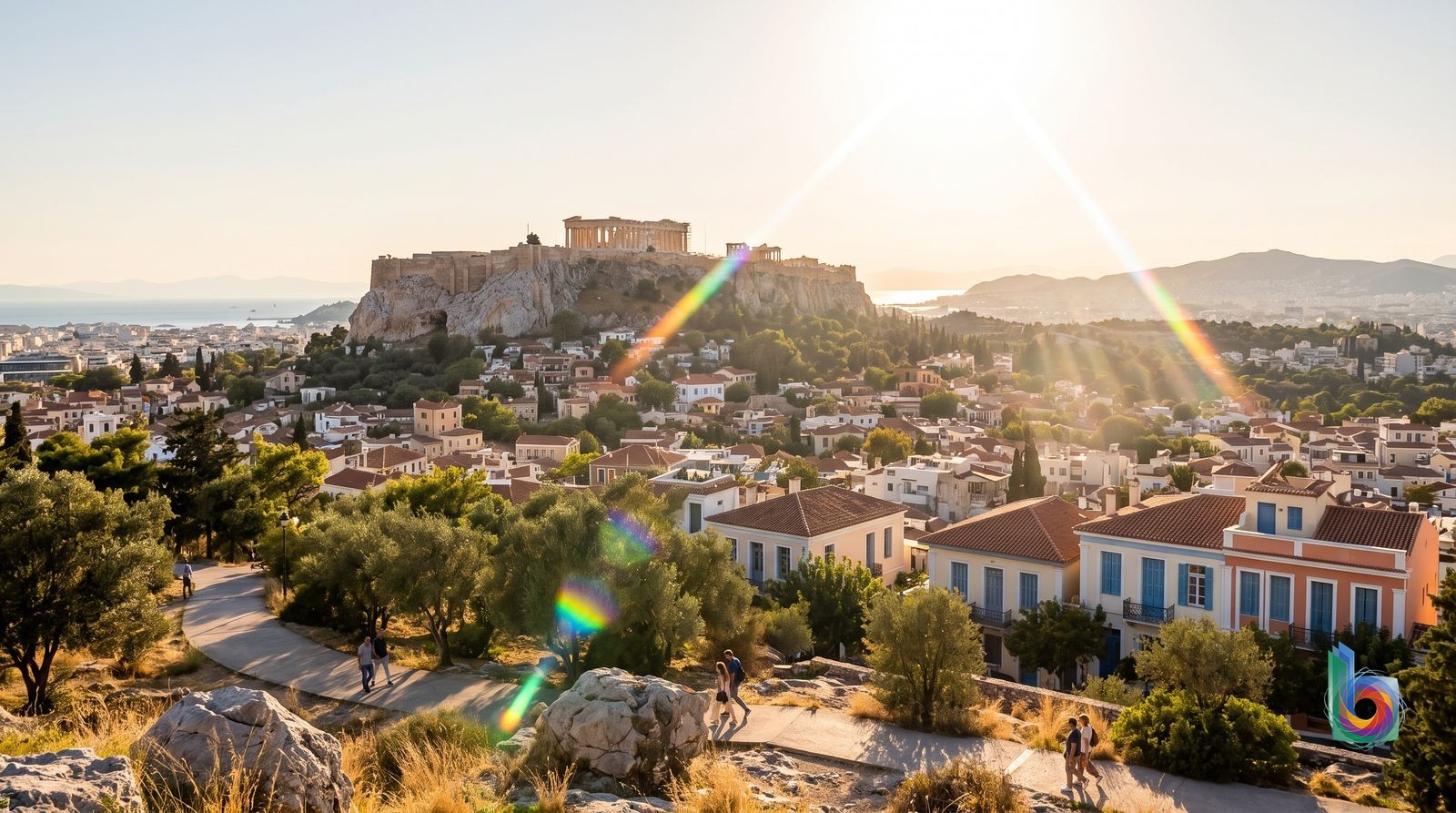
First visit? Stay in Plaka.
Athens’ smartest central base suits travelers who want polished hotels, galleries, serious restaurants and quieter streets. It is still central, with Evangelismos on Line 3 and Syntagma within reach, but it feels more refined than the busy square itself. Accept the hills, premium prices and longer walk to the Acropolis.
For travelers who value location and transit over serenity, Monastiraki puts the historic core on the doorstep and connects Metro Lines 1 and 3, including useful links toward Piraeus and the airport. It is often better value than Plaka, but only book on a side street and check noise reviews: the square, market lanes and some view-driven restaurants are intensely touristy.
This is the balanced family base: close to the Acropolis Museum and Metro Line 2, walkable to the major sights, and generally calmer after dinner than Monastiraki or Psyrri. Stay deeper in Koukaki rather than on the busiest Makrygianni approaches; summer hills and tour-group traffic remain the trade-offs.
Psyrri works for travelers who want bars, casual food and late evenings within a short walk of Monastiraki and the historic core. It has more texture than a generic hotel district, but choose carefully by block: bar noise is genuine, and quieter fringe streets can feel less comfortable late at night.
For a slower Athens stay, Thissio and Petralona offer neighborhood restaurants, lower-key evenings and access to the Ancient Agora without Plaka’s constant crowd pressure. Thissio is the better location for sightseeing; farther into Petralona trades convenience for a more residential feel. Line 1 is helpful but less flexible than the Syntagma or Monastiraki interchanges.
Syntagma is the most practical central base for travelers who expect to use the network repeatedly: Lines 2 and 3 meet here, and Line 3 is the straightforward airport connection. It is also walkable to Plaka, Monastiraki and the Acropolis area. The compromise is a busier, more commercial setting, with traffic and occasional demonstrations around the square.
Pangrati rewards a traveler who has already ticked off the Acropolis circuit and wants cafés, restaurants, the Panathenaic Stadium area and a more residential version of Athens. It is not the transit-easiest choice—many addresses depend on buses and walking—so it suits a longer, less checklist-driven stay.
Avoid sleeping near The immediate Omonia and Larissa Station blocks: These areas can look inexpensive and transport-convenient on a map, but they are a poor default for a leisure stay: the streetscape is less pleasant, the hotel stock is uneven, and you will spend more time walking or riding back from the historic core. Athens is generally safe, but this is not where most first-time visitors find the city at its most comfortable or appealing after dark.
Avoid sleeping near Monastiraki Square and the loudest market-facing or rooftop-bar streets: The location is excellent; sleeping directly on the action often is not. Crowds, station noise, late diners, deliveries and view-premium restaurants make this a frequent case of paying more for less rest. Stay in Monastiraki only if the hotel has convincingly quiet rooms or is set back on a side street.
Avoid sleeping near Psyrri’s bar-cluster streets: Psyrri is a good nightlife base, not a universal one. Rooms above or beside bars can be noisy well after midnight, particularly on weekends; restaurant quality and the feel of the street vary sharply by block. Pick Koukaki & Makrygianni or Thissio & Petralona if sleep is more important than being able to walk home from drinks.
Avoid sleeping near Glyfada & the Athens Riviera for a short, sight-focused first visit: The coast is pleasant, but it is the wrong kind of convenience if the Acropolis, Agora and central museums are your daily plan. Tram and onward connections make the historic center a project rather than a stroll. Use it when beach time is a real priority, not because a coastal hotel looks more resort-like.
Avoid sleeping near Piraeus, unless an early ferry or port stay is the purpose: Piraeus is sensible before an island departure and has Lines 1 and 3, but it is a working port rather than a central Athens base. Daily returns after sightseeing add friction, and the immediate port environment is not the waterfront escape many booking photos imply.
The neighborhoods
Pick the areas you want to be around — the hotels and tables below narrow to them.
Old lanes beneath the Acropolis
Athens’ postcard quarter is still a sensible place to stay, not just a stage set: narrow pedestrian lanes, neoclassical facades, small hotels and immediate access to the Acropolis slopes. It is at its best early morning and after dinner; by midday its central lanes are firmly on the tourist circuit.
Vs. others: Pick Plaka over Monastiraki if you want a quieter, more picturesque base beside the sights; pick Monastiraki if metro convenience and evening energy matter more.
Best for: first-timers, families, short stays, walkers
Its most central lanes are crowded and restaurant menus can be tourist-oriented. · Cars and taxis have limited access on many narrow streets. · Metro and crowded pedestrian areas are pickpocket territory.
See hotels in PlakaLived-in Acropolis-side village
South and southeast of the Acropolis, Koukaki and Makrygianni combine the Acropolis Museum end of sightseeing with residential streets, cafés and a calmer evening rhythm than Plaka. Makrygianni is more visitor-heavy; deeper Koukaki feels more like a neighborhood, though short-term rentals have changed it markedly.
Vs. others: Pick Koukaki over Plaka for a more residential feel and better everyday dining; pick Plaka for the most immediate old-town atmosphere and flatter access to the central sights.
Best for: first-timers, families, foodies, travelers wanting a calmer central base
The uphill streets toward the Acropolis can be tiring in summer heat. · The area is no longer an undiscovered bargain. · Makrygianni’s main approaches can be busy with tour groups.
See hotels in Koukaki & MakrygianniCentral, connected, businesslike
This is the practical center: Parliament and Syntagma Square, shopping streets, major hotels, banks and the most useful interchange in town. It lacks Plaka’s intimacy, but makes a very efficient base for a short trip, especially if plans span museums, neighborhoods and airport or port connections.
Vs. others: Pick Syntagma over Plaka if transit and hotel convenience outweigh atmosphere; pick Plaka if you want to step straight into historic lanes rather than a busy civic and commercial center.
Best for: first-timers, luxury travelers, short stays, travelers prioritizing transit
Traffic, crowds and protest activity can affect the square and nearby streets. · Restaurants immediately around the square are not automatically the best value. · It can feel corporate rather than characterful after shops close.
See hotels in Syntagma & the Commercial TriangleMarkets, ruins, and metro access
Monastiraki is the high-energy hinge between the Ancient Agora, flea-market streets, Plaka and Psyrri. It is excellent for being in the middle of everything and poor for pretending Athens is quiet. The square itself is a transport hub and a persistent crowd scene, while side streets vary quickly in feel.
Vs. others: Pick Monastiraki over Koukaki if you want the fastest metro links and late-night life; pick Koukaki if you want a calmer place to come home to near the Acropolis.
Best for: first-timers, budget travelers, nightlife, travelers relying on metro
The square and market lanes are crowded, especially in season. · Pickpocket risk is higher in the station and packed streets. · Some rooftop bars and restaurants trade more on the Acropolis view than the food.
See hotels in MonastirakiCreative lanes, late nights
Psyrri sits just north of Monastiraki: a dense mix of workshops, bars, casual eating, street art, small hotels and increasingly polished visitor businesses. It can be lively and appealingly rough-edged, but it is not the serene old Athens of hotel brochures.
Vs. others: Pick Psyrri over Kolonaki for bars and informal eating at a less formal price point; pick Kolonaki for quieter, smarter streets and upscale hotels.
Best for: nightlife, foodies, return-visitors, budget-minded travelers
Noise from bars and late diners is a real accommodation issue. · Quality varies block by block, including restaurants aimed squarely at visitors. · The walk can feel less comfortable on quieter fringe streets late at night than in Plaka.
See hotels in PsyrriPolished hill streets and galleries
Kolonaki is central Athens at its most affluent: designer shopping, galleries, smart cafés, embassies and established restaurants on the slopes of Lycabettus. It is handsome and civilized rather than ancient-site central; travelers pay for that polish and for the uphill geography.
Vs. others: Pick Kolonaki over Syntagma for a quieter, more refined residential atmosphere; pick Syntagma for better interchange transit and a shorter walk to Plaka and Monastiraki.
Best for: luxury, foodies, quiet, return-visitors
It is expensive by Athens standards. · Many streets are steep, especially toward Lycabettus. · It can feel subdued at night compared with Psyrri or Monastiraki.
See hotels in KolonakiBooks, politics, and edge
Exarchia is Athens’ famously political, student and alternative quarter: bookshops, cafés, music, murals and an atmosphere that remains more argumentative than polished. It rewards travelers who like cities with visible social life, but it is not the effortless first-time base some listings make it sound like.
Vs. others: Pick Exarchia over Kolonaki if you want independent cafés and political edge rather than upscale calm; pick Kolonaki if you want a quieter, more conventional stay.
Best for: return-visitors, budget travelers, culture seekers, travelers interested in political Athens
Demonstrations and occasional clashes with police can occur, particularly at night and around political flashpoints. · Street conditions and noise vary sharply by block. · It is less convenient than Plaka or Syntagma for the headline ancient sites.
See hotels in ExarchiaFormer gasworks, clubbing, archaeology
Around the old gasworks and the Kerameikos archaeological site, Gazi is a nightlife district with restaurants, bars and converted industrial space. It is a strong choice for evenings and a weak choice for anyone who expects antique Athens outside the window; the ancient cemetery nearby is the quieter counterpoint.
Vs. others: Pick Gazi over Psyrri if clubs and larger nightlife venues are the priority; pick Psyrri if you want to walk more easily to Monastiraki, the Agora and Plaka.
Best for: nightlife, groups of friends, return-visitors, travelers wanting a modern Athens evening
Late-night noise can be substantial. · Some streets feel quiet and uninviting once venues close. · It is more a place to go out than a charming all-day wandering district.
See hotels in Gazi & KerameikosLocal terraces by the ancient core
Thissio provides Acropolis views, pedestrian walks and access to the Agora, while neighboring Petralona becomes more residential and dining-led. Together they offer a less tourist-saturated alternative to Plaka without giving up walkability, though their appeal is stronger for a slower stay than a checklist weekend.
Vs. others: Pick Thissio and Petralona over Monastiraki for a more local, lower-key evening; pick Monastiraki for faster metro connections and immediate access to the busiest historic core.
Best for: foodies, families, quiet, return-visitors
Line 1 is useful but not as versatile as the Syntagma or Monastiraki interchange. · Acropolis-view terraces can be priced for the view. · The farther into Petralona you stay, the less sightseeing-convenient the address becomes.
See hotels in Thissio & PetralonaCafés beyond the tourist core
Pangrati is a residential, café-and-restaurant neighborhood east of the center, anchored by the Panathenaic Stadium area and close to museums. It is a convincing choice for travelers who have already done Athens’ obvious sights or who want to eat and live more locally; it is not the most frictionless first visit.
Vs. others: Pick Pangrati over Koukaki if local café life and a less visitor-heavy setting matter more than Acropolis proximity; pick Koukaki for easier access to the major sites and Metro Line 2.
Best for: foodies, quiet, return-visitors, longer stays
Metro access is uneven depending on the exact street. · The central sights are not at the doorstep. · Its residential character means less late-night action and fewer tourist services.
See hotels in PangratiWorking port, islands gateway
Piraeus is a real port city attached to Athens, not an Acropolis neighborhood with sea air. It makes sense for an early ferry, a port-focused itinerary or a longer stay that values waterfront life; for a first sightseeing visit, it adds a daily commute to the ancient center.
Vs. others: Pick Piraeus over Syntagma if a ferry departure is the point of the overnight; pick Syntagma if the Acropolis, museums and central Athens are the point of the trip.
Best for: island hoppers, rail-day-trips, return-visitors, travelers with early ferries
It is a working transport hub, with traffic and port activity rather than old-town charm. · The commute back from central sightseeing can feel tiresome after a full day. · The immediate port environment is less appealing than the waterfront imagery suggests.
See hotels in PiraeusCoastal comfort, city commute
Glyfada is the polished, commercial end of the southern coastal suburbs: beaches, cafés, shopping and a more resort-like rhythm than central Athens. It works when the coast is part of the holiday, not when the Acropolis is the daily plan. It is a different trip from sleeping in Plaka.
Vs. others: Pick Glyfada over Piraeus if beaches, coastal dining and a suburban resort feel matter more than ferries; pick Piraeus if you need the port or more direct metro access to central Athens.
Best for: families, luxury, beach-oriented travelers, quiet
It is not a convenient base for daily ancient-site sightseeing. · Coastal accommodation can cost more without delivering central-city access. · The beach-and-shopping setting can feel disconnected from the Athens visitors come to see.
See hotels in Glyfada & the Athens Riviera


