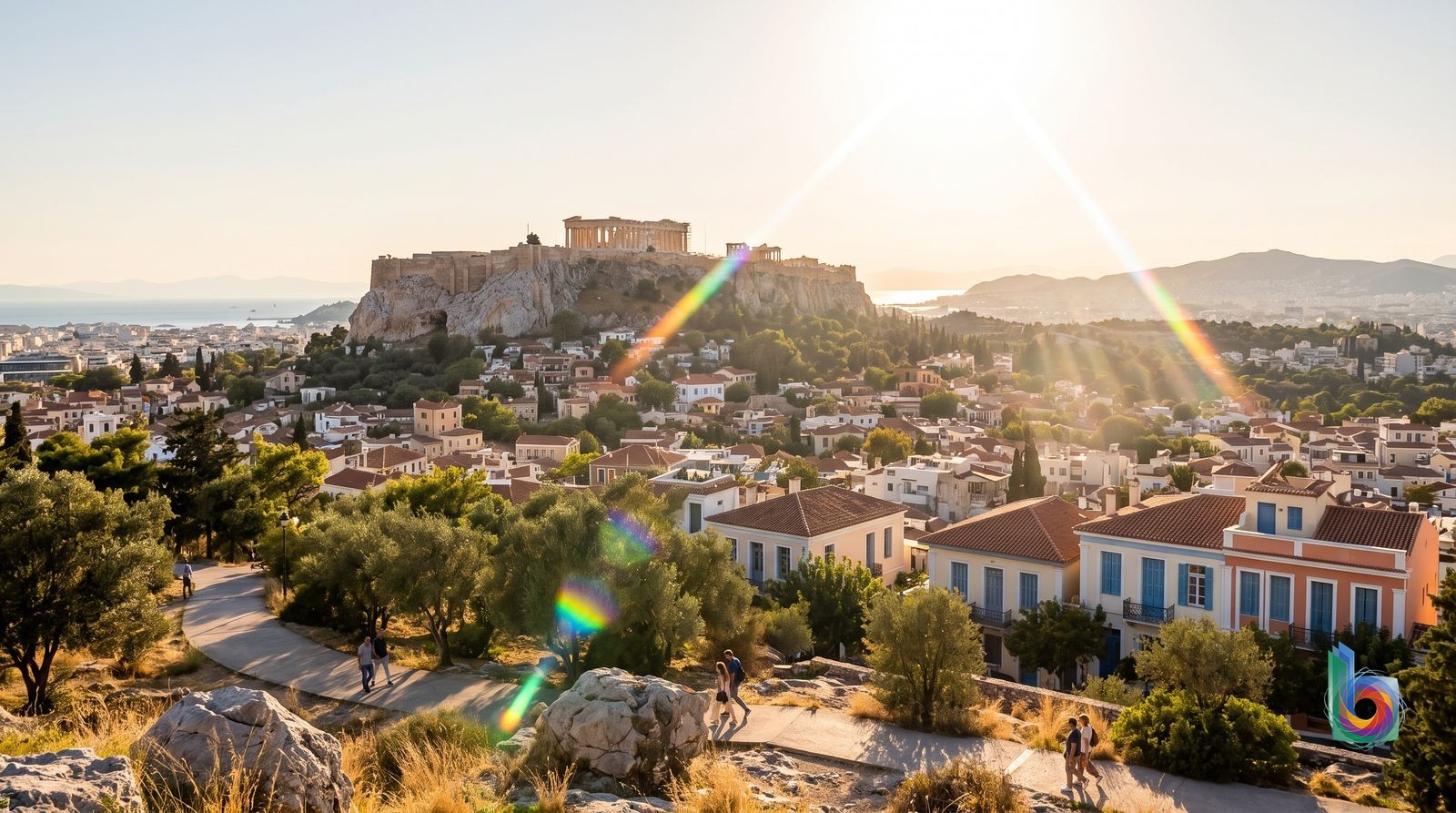
Season by season
December–March
The quietest stretch, with short daylight and cooler, occasionally wet weather. It is still a strong time for museums and archaeology, but some sites close earlier in winter.
Less reliable walking weather and fewer daylight hours; Orthodox Easter, when it falls in this period, changes opening patterns and can fill the city.
April–May
The best all-round season: generally comfortable for walking, the city is lively, and the worst summer heat has not arrived.
Demand rises around holidays and Easter; reserve a specific Acropolis timed entry well ahead.
June–August
Hot to punishingly sunny, especially around midday. The Acropolis has crowded timed entries and cruise-day surges; plan major outdoor sights for early morning or late afternoon.
Heat, crowds and peak-season booking pressure are real. Do not expect the metro to be a reliable air-conditioned escape.
September–October
A second excellent shoulder season: walking becomes tolerable again while the city remains lively, with generally good conditions for the archaeological core.
Popular Acropolis slots still need advance booking, particularly in late September; occasional warm spells remain possible.
November
A transition into the quieter winter season, with cooler weather and shortening days but far less summer intensity.
Weather is less dependable for long outdoor days, and winter site hours begin to matter more.
Events worth planning around
Orthodox Easter · Usually March or April; dates vary each year.
It changes museum and archaeological-site opening patterns and fills the city. Book accommodation and key timed attractions early; Holy Saturday's candlelit vigil is memorable, but plan logistics around closures and crowds.
Athens Epidaurus Festival · Usually summer, with Athens performances commonly running from June into August.
Major performances, including dates at the Odeon of Herodes Atticus beneath the Acropolis, can sell out. Book as soon as the programme matches your travel dates rather than waiting until arrival.
Getting around
Walking
The historic core: Acropolis, Plaka, Anafiotika, Monastiraki, Thissio and Syntagma knit together well on foot. It is the best way to experience the old city and usually beats a taxi for short central hops.
Group sights by area and start early in warmer months. Wear shoes that cope with broken paving and polished stone; use the metro to reset your position rather than trying to walk every cross-town leg.
Athens is only a walking city in its core. Acropolis-side streets in Koukaki and Makrygianni are uphill; Kolonaki’s Lycabettus slopes are steep; and the Acropolis from Thissio/Petralona is farther and hillier than it looks. Pangrati, Piraeus and Glyfada are not practical sight-to-sight walks, while midday heat and traffic make even central distances punishing.
Metro
The default for longer central trips and port/airport links. Line 1 is useful for Piraeus, Monastiraki, Thissio and Petralona; Line 2 runs north-south through Acropoli, Syntagma and Panepistimio; Line 3 serves Syntagma, Monastiraki, Kerameikos, Evangelismos, Piraeus and the airport.
Use the three-line network as the backbone, then walk the final stretch. A 90-minute OASA ticket covers metro, bus and tram transfers; contactless Visa/Mastercard or phone tap-to-pay works, including for airport fares. Monastiraki is the useful Line 1/3 interchange, while Syntagma connects Lines 2 and 3.
Coverage is uneven beyond the core: Pangrati largely depends on buses, Glyfada is not on the metro despite nearby inland Elliniko, and much of Exarchia sits awkwardly between stations. It is not an air-conditioned sanctuary in high summer, and packed rush-hour trains—especially around airport-line interchanges and Monastiraki—are prime pickpocket territory.
Bus and tram
Use buses for districts the metro misses, especially Pangrati, and the tram when the southern coast is the destination rather than the Acropolis. They are also useful as a fallback when a route is too uphill or tiring to walk.
The same 90-minute OASA ticket covers bus and tram transfers with the metro. Check the live route before setting out, particularly for cross-town journeys; allow generous time rather than treating a bus timetable as a promise.
Traffic is the weakness: buses can be slow and crowded, and the tram is a coastal connection rather than a quick route into the historic center. From Glyfada and the Athens Riviera, expect a substantially longer, less direct trip to the Acropolis than the map suggests.
Taxi or ride-hail
Late-night returns, luggage, mobility needs, and cross-town trips that would otherwise mean awkward changes—particularly to or from Pangrati, the outer parts of Exarchia, or coastal addresses. It is also the sensible backup after nightlife in Gazi or Psyrri when trains are no longer useful.
Use a reputable app when possible for a recorded fare, or take a licensed taxi and make sure the meter is running. Keep the destination address ready rather than relying on a district name alone.
Do not use taxis as the default in the central core: traffic, one-way streets and limited access in Plaka’s narrow lanes often make walking quicker. Around Syntagma, demonstrations can close streets at short notice; after a ferry, do not automatically join the Piraeus taxi queue if Metro Line 1 or 3 serves your hotel.
Rental car
Only for trips well beyond Athens where a car is genuinely the point—rather than for getting around the city itself.
If you need one for an out-of-town itinerary, collect it when leaving central Athens and return it before coming back. For a city stay, combine walking, metro and occasional taxis instead.
Avoid driving in central Athens. Parking, congestion, aggressive traffic and one-way streets make it a liability, particularly around Plaka, Monastiraki and Syntagma. A car is also poor value for Piraeus and useless for the dense historic core; Glyfada’s coastal setting does not make daily driving to the ancient sites a pleasant plan.
Safety: Keep your bag zipped and in front on the metro and in crowded tourist areas, refuse any unsolicited “police” document or wallet check, and avoid Syntagma when demonstrations are announced.
Book before you land
Acropolis: this is the non-negotiable advance booking. Timed entry has been mandatory since 2024; buy only through the official HHTicket site. In spring through autumn, book as soon as your date is firm—at least a week ahead for a specific early-morning or late-afternoon slot, longer around holidays. Arrive close to your booked window: staff do not let visitors queue far in advance. · Acropolis Museum: book a timed slot ahead in the busy season if you want to pair it with the Acropolis at a precise time. It is separate from the Acropolis ticket; do not assume a combined booking or leave too little time between them. · Odeon of Herodes Atticus performances, especially Athens Epidaurus Festival dates: book when the programme and your travel dates line up. The venue is extraordinary, but popular performances can sell out; this is not a ticket to gamble on after arrival.
- Keep bags zipped and in front of you on the metro, especially at airport-line interchanges, station doors, packed buses and in Plaka. The usual local posture—hand on bag, valuables out of reach—is the right one.
- Treat a stranger who suddenly wants to help, then introduces supposed police asking to inspect your passport or wallet, as a scam. Refuse, keep hold of your documents and go into a real shop, hotel or police point if necessary.
- Use contactless payment freely, but carry a small amount of cash for kiosks, small purchases and contingencies. Check the bill before paying in tourist-heavy areas; do not let anyone walk away with your card.
- Dress modestly inside Orthodox churches: covered shoulders and legs are the respectful baseline. These are working places of worship, not decorative extensions of the archaeological circuit.
- Greek dining runs late. A 19:00 dinner is possible but early by local standards; do not mistake a restaurant full of empty tables at that hour for a bad one.
- If a demonstration is announced, give Syntagma and nearby government streets a wide berth rather than trying to thread through it. Protests are part of city life, but transport disruption and tear gas are not sightseeing.
Worth leaving the city for
Cape Sounion and the Temple of Poseidon7–9 hours door to door by KTEL bus or car; roughly 1 hour each way by car from central Athens, longer by bus.
This is the cleanest escape from Athens: a coastal run through the southern suburbs, then a genuinely dramatic clifftop sanctuary above the Aegean. Go late afternoon for the light, but expect company; it is not a secret. It beats another afternoon in central Athens if you want sea and landscape rather than another archaeological site.
Aegina8–10 hours door to door, including getting to Piraeus and ferry time; allow a full day.
The practical island day: close enough to make the ferry ride part of the day rather than an endurance test, with a working port town, pistachios, waterfront lunch and the Temple of Aphaia if you want an ancient-site add-on. It beats a city day when you want an actual Greek-island reset, not a box-ticking cruise excursion.
Hydra10–12 hours door to door from central Athens via Piraeus; a full, long day.
More beautiful and more distinctive than Aegina: no cars, stone lanes, a handsome harbour and proper walking. The downside is that it is a long, expensive day for relatively little sightseeing; choose it for atmosphere and swimming/walking in warm weather, not efficiency.
Delphi11–13 hours door to door by organised tour, bus or rental car; an early-start full day.
If Greek antiquity is the reason you came, Delphi is the one major archaeological excursion that can rival another day in Athens. The sanctuary's mountain setting gives the ruins force that the city sites cannot replicate. It is a punishing day trip, though; do not pretend it is nearby.
Mycenae, Epidaurus and Nafplio11–13 hours door to door by car or organised tour; a full day.
This is the best Peloponnese combination: Bronze Age Mycenae, the exceptionally preserved theatre at Epidaurus, and Nafplio for a civilised waterfront lunch and walk. It beats a further Athens day for travellers with a car or a good small-group tour; attempting it independently by public transport is more trouble than it is worth.
Researched Oct 28, 2026