- Pace
- Use one central urban base—Shinjuku, Shibuya, Ueno, Asakusa, Ginza/Tokyo Station or Kiyosumi-Shirakawa—and do not waste time changing hotels within the wards: even apparently short hops often take 30–50 minutes door to door. Give the core five full days before day trips; Mt. Takao is an easy full day at roughly 50 minutes direct from Shinjuku, while Okutama is about two hours each way and deserves an overnight if hiking is the point. Oshima needs at least two nights and weather flexibility; Ogasawara, reached by a roughly 24-hour ship journey each way, requires at least a week.
- When to go
- Late October through November is Tokyo’s best all-round window: walking weather is crisp, skies are clearer and Takao/Okutama are excellent, though foliage weekends fill up. Late April to mid-May is nearly as good if you avoid Golden Week; peak cherry blossom weeks are beautiful but poor value and relentlessly crowded. Winter is the smart budget-and-clear-skies choice, while summer works only for travelers willing to plan around oppressive heat, humidity and possible typhoon disruption.
- Daily budget
- ¥28,000–48,000
Tokyo Prefecture is four very different trips under one government: the dense capital of temples, rail hubs, food and nightlife; the quieter western suburbs; real mountains and river valleys in Tama; and volcanic or subtropical islands far out in the Pacific. Beyond the postcard cityscape, it is a place where Edo-era low-city neighborhoods, obsessive dining, design and pop culture sit within reach of Mt. Takao—and, with serious planning, remote island travel.
Known for
- Extreme urban variety: food, shopping, design, nightlife and pop culture
- Edo heritage, including temples, old low-city neighborhoods and Edomae food
- Exceptionally efficient rail transit and dense walkable neighborhood life
- Major museums, architecture and contemporary art
- Mt. Takao and the mountain landscapes of western Tama
- Volcanic Izu Islands and the remote subtropical Ogasawara Islands
Where to go
Asakusa, Ueno, Yanesen and Akihabara
1Short stop · 1 day
Asakusa, Ueno, Yanesen and Akihabara
The most coherent old-Tokyo day: Senso-ji early, Ueno’s serious museums and market energy, then Yanaka’s low-rise lanes. Akihabara is worth adding if pop culture is actually your interest, not as an obligation.
first-timersmuseum-goersfamiliescompact walking days
Explore Asakusa, Ueno, Yanesen and Akihabara Marunouchi, Nihonbashi, Ginza, Tsukiji and the waterfront
2Marunouchi, Nihonbashi, Ginza, Tsukiji and the waterfront
Short stop · 1 day
Come for Tokyo Station, Nihonbashi’s merchant-city remnants, Ginza food basements and a Tsukiji breakfast-and-snacking circuit. It is polished and expensive, but exceptionally practical for rail connections and food-focused stays.
foodiesdesign shoppersbusiness travelers
Shinjuku, Kagurazaka and Nakano/Koenji
3Shinjuku, Kagurazaka and Nakano/Koenji
Base · 1–2 days
Use Shinjuku for its rail convenience and late-night density, then escape its glare in Kagurazaka’s restaurant lanes or Nakano and Koenji’s record, vintage and collector shops. It is a strong base, not a tranquil neighborhood.
nightlifesolo travelersshort stays
Shibuya, Harajuku, Omotesando and Daikanyama
4Shibuya, Harajuku, Omotesando and Daikanyama
Short stop · 1 day
This is the best concentration of contemporary Tokyo: fashion, architecture, cafés, Meiji Jingu and city views from Shibuya Sky. Skip Takeshita Street unless crowded teen retail is specifically the point.
first-timersshoppersarchitecture fans
Ryogoku, Kiyosumi-Shirakawa, Fukagawa and Tsukishima
5Ryogoku, Kiyosumi-Shirakawa, Fukagawa and Tsukishima
Short stop · 1 day
An east-bank food and craft belt with sumo culture, canals, specialty coffee and distinctly local dishes: chanko-nabe, fukagawa-meshi and monjayaki. Better for deliberate eating and wandering than for big nightlife.
foodiesrepeat visitorscoffee lovers
Toyosu and Odaiba
6Toyosu and Odaiba
Go for teamLab Planets, Toyosu Market and broad bay views, not neighborhood texture. It works as a planned half- or full-day outing, especially with children; do not make it your default Tokyo base.
familiesdigital-art fansfirst-timers
Kichijoji and Mitaka
7Kichijoji and Mitaka
Short stop · 1 day
A satisfying look at lived-in Tokyo: Inokashira Park, small shops, cafés and record stores rather than another mega-hub. Pair it with Mitaka only if you have the hard-to-get Ghibli Museum reservation.
familiesStudio Ghibli fanscouples
Hachioji and Mt. Takao
8Hachioji and Mt. Takao
Short stop · 1 day
Tokyo’s cleanest nature break: forest trails, Yakuoin Temple and an easy return to the city from Takaosanguchi. Go early and hike at least one way; the cable car and autumn crowds mean this is accessible mountain scenery, not wilderness.
first-timershikersfamilies
Okutama, Ome and Mt. Mitake
9Okutama, Ome and Mt. Mitake
Short stop · 1 day
This is where Tokyo genuinely becomes mountains, river gorges, lake country and hiking territory. Give it an overnight if possible: the travel time, buses and cable cars make it a poor fit for a casual city day.
hikersoutdoor travelerssummer travelers
Izu Islands: Oshima, Niijima/Shikinejima, Kozushima and Hachijojima
10Izu Islands: Oshima, Niijima/Shikinejima, Kozushima and Hachijojima
Base · 3 days
Choose Oshima for Mt. Mihara and volcanic landscapes; Niijima or Shikinejima for beaches and surf; Hachijojima for a more tropical hiking-and-onsen stay. These are real island trips with weather-dependent transport, not add-ons to a city weekend.
beach travelersdivershikers
Ogasawara: Chichijima and Hahajima
11Ogasawara: Chichijima and Hahajima
Base · 8 days
Tokyo’s most serious nature escape has coral water, endemic wildlife and a genuine expedition rhythm. The roughly 24-hour ship journey each way means it deserves at least a week and is wrong for a standard first visit.
diverswildlife travelersserious nature travelers
Don't miss
1
Tokyo TowerTokyo (東京 Tōkyō)
The red-and-white tower remains Tokyo’s most recognizable old-school skyline symbol, even if newer decks are higher. Use it for a classic city view, preferably combined with a walk through the temple-and-embassy streets around Zojoji.
2
Tokyo SkytreeTokyo (東京 Tōkyō)
The 634-metre Skytree delivers the widest, most legible view of the metropolitan sprawl and is particularly worthwhile in clear winter weather. It is a different experience from Tokyo Tower: come for scale and the Sumida-side setting, not historic atmosphere.
3
Shibuya SkyTokyo (東京 Tōkyō)
Its open-air roof is the most immediate central-Tokyo panorama, with the crossing, rail lines and dense cityscape visible beneath you. It works best as the payoff after exploring Shibuya, rather than as a standalone observation-deck visit.
4
Shibuya Scramble CrossingTokyo (東京 Tōkyō)
The crossing is the essential few-minute Tokyo urban spectacle: a mundane commute made cinematic by scale and choreography. Cross it once, then watch from an upper-floor café or Shibuya Sky for the full pattern.
5
Senso-ji TempleTokyo (東京 Tōkyō)
Tokyo’s oldest major temple is the city’s most direct introduction to living Buddhist ritual, incense, lanterns and the commercial approach along Nakamise-dori. Arrive early enough to see the temple before the shopping street turns into a shoulder-to-shoulder procession.
6
Meiji JinguTokyo (東京 Tōkyō)
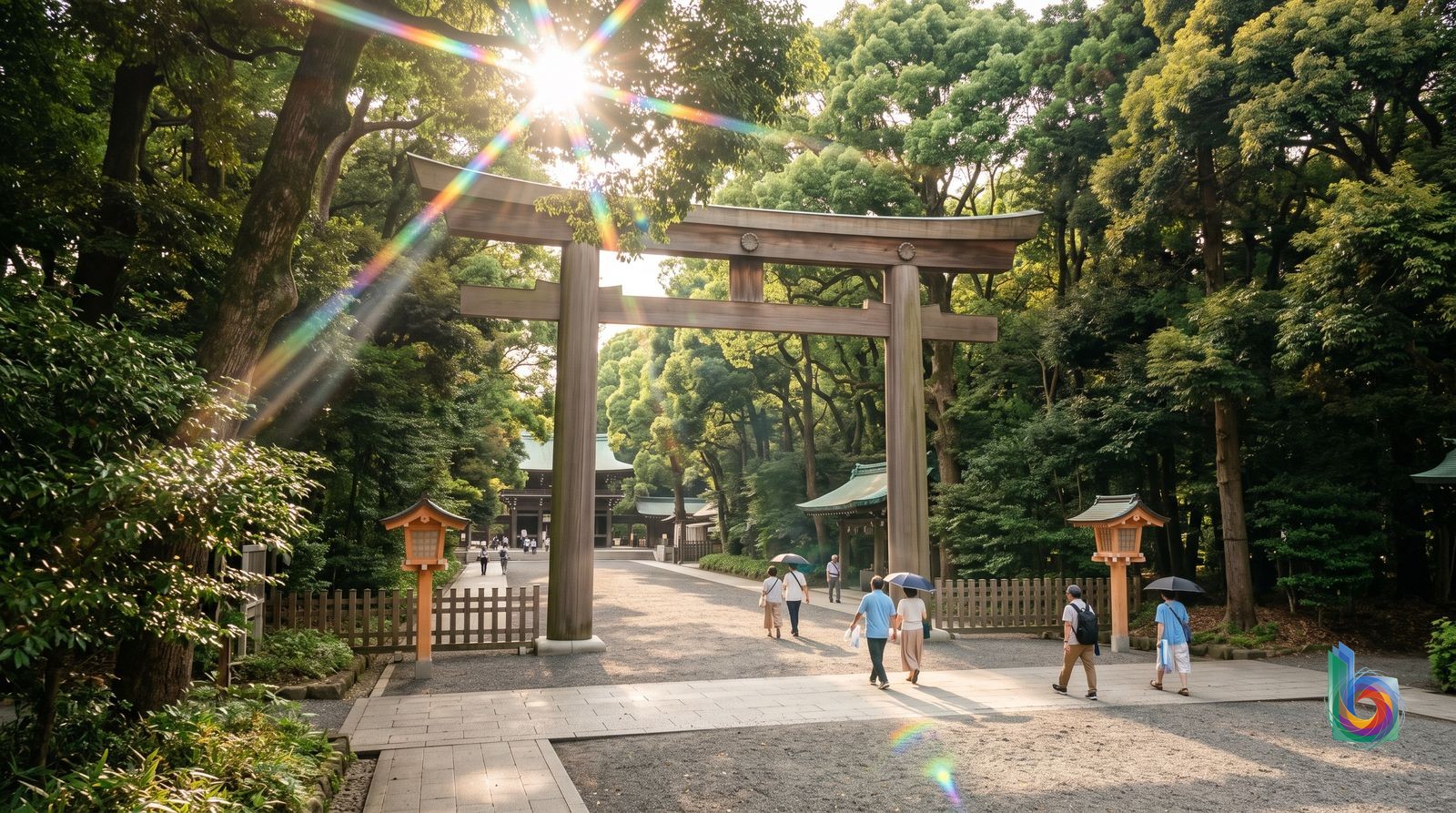
The long forest approach and restrained shrine architecture offer a powerful counterpoint to Harajuku and Shibuya immediately outside. It is one of the clearest ways to understand how ritual, nature and huge-city life coexist in Tokyo.
Getting your bearings
Numbers match the places above; small dots are the headline sights.
The mental map
Think first in layers rather than as one city: east/old Tokyo for Asakusa, Ueno, Ryogoku and Fukagawa; central and south for Tokyo Station, Ginza, Nihonbashi and the bay; and west for Shinjuku, Shibuya, Harajuku, Nakano and Koenji. Beyond the wards, Tama covers Kichijoji, Mitaka, Hachioji, Mt. Takao and Okutama; the Izu Islands are a separate short-break trip, while Ogasawara is a full expedition.
When to go
Late October through November is Tokyo’s best all-round window: walking weather is crisp, skies are clearer and Takao/Okutama are excellent, though foliage weekends fill up. Late April to mid-May is nearly as good if you avoid Golden Week; peak cherry blossom weeks are beautiful but poor value and relentlessly crowded. Winter is the smart budget-and-clear-skies choice, while summer works only for travelers willing to plan around oppressive heat, humidity and possible typhoon disruption.
Pacing a visit
Use one central urban base—Shinjuku, Shibuya, Ueno, Asakusa, Ginza/Tokyo Station or Kiyosumi-Shirakawa—and do not waste time changing hotels within the wards: even apparently short hops often take 30–50 minutes door to door. Give the core five full days before day trips; Mt. Takao is an easy full day at roughly 50 minutes direct from Shinjuku, while Okutama is about two hours each way and deserves an overnight if hiking is the point. Oshima needs at least two nights and weather flexibility; Ogasawara, reached by a roughly 24-hour ship journey each way, requires at least a week.
Book before you land
Ghibli Museum, Mitaka — advance reservation required; releases disappear quickly and the museum has Tuesday and periodic longer closures. · teamLab Planets, Toyosu — timed-entry slots can sell out, especially weekends and school holidays. · Shibuya Sky — timed admission is often unavailable close to the date, particularly for sunset. · Tokyo Grand Sumo Tournament tickets at Ryogoku Kokugikan — book as soon as sales open if your dates align with a tournament. · Izu Islands and Ogasawara transport and accommodation — limited supply and weather-sensitive schedules make advance booking essential, particularly for Oshima weekends and all Ogasawara sailings.
Getting in
HNDHaneda Airport
The best airport for central Tokyo: it is close enough that Tokyo Station, Shinagawa, Shinjuku and the eastern wards are practical by train or airport bus. Use it whenever the fare and flight timing are comparable to Narita.
Flights and transfers into TokyoNRTNarita International Airport
The main long-haul alternative, well outside Tokyo in Chiba. Narita Express is useful for Tokyo Station, Shinjuku and Shibuya; Keisei Skyliner is fastest for Ueno. Allow roughly an hour or more to reach your hotel after clearing the airport.
Flights and transfers into NaritaTokyo Station
The principal Shinkansen gateway from Kyoto, Osaka, Nagoya, Sendai and beyond. It is ideal for Ginza, Nihonbashi, Marunouchi and east-side bases; Shinjuku or Shibuya still require a cross-city train transfer.
Flights and transfers into TokyoShinagawa Station
A major Tokaido Shinkansen stop and the most convenient rail gateway for south/west Tokyo or a Haneda connection. It is often easier than Tokyo Station if you are staying in Shibuya, Shinjuku or near Shinagawa.
Flights and transfers into ShinagawaTakeshiba Passenger Ship Terminal
The departure point for the Izu Islands and Ogasawara. Treat island sailings as real transport commitments, not spontaneous excursions: jetfoils, overnight ferries and the Ogasawara ship are weather- and schedule-dependent.
Before you go
Questions worth settling
How many days do I need for a first Tokyo trip?
Give central Tokyo at least five full days before adding day trips. Add a full day for Mt. Takao; make Okutama an overnight if hiking is the point, and treat the Izu Islands or Ogasawara as separate trips.
Where should I stay in Tokyo?
Choose one central base and keep it for the whole city stay: Shinjuku is best for nightlife and westbound day trips, Ueno or Asakusa for the old east side, and Tokyo Station or Ginza for rail and airport connections. Do not change hotels within the wards just to sample neighborhoods—short-looking trips often take 30–50 minutes door to door.
Which Tokyo neighborhoods should I combine in the same day?
Pair Asakusa, Ueno and Yanesen for an old-Tokyo and museum day; add Akihabara only if pop culture is a real interest. Combine Shibuya, Harajuku, Omotesando and Daikanyama for fashion, architecture and Meiji Jingu, or make Toyosu and Odaiba a planned half- or full-day waterfront outing.
Do I need a visa for Japan?
Many passport holders, including visitors from the US, Canada, UK, EU, Australia and New Zealand, commonly receive visa-free short stays of up to 90 days. Other nationalities may need a visa or eVisa; verify current entry rules, permitted stay length and onward-ticket expectations with Japan’s Ministry of Foreign Affairs before booking.
How do I get around Tokyo, and should I rent a car?
Use trains and subways for almost everything in the central wards, with an IC card for routine fares and Google Maps or a Japanese transit app for routing. Do not rent a car for central Tokyo; consider one only for a deliberate western-Tokyo or island trip.
When is the best time to visit Tokyo?
Late October through November is the best all-round period for comfortable walking and Mt. Takao or Okutama hikes, though foliage weekends are busy. Late April to mid-May is also good if you avoid Golden Week; winter offers clear skies and better value, while summer is hot, humid and can bring typhoon disruption.
What should I book ahead?
Reserve Ghibli Museum in Mitaka as soon as possible, and book teamLab Planets in Toyosu, Shibuya Sky—especially for sunset—and Ryogoku Grand Sumo Tournament tickets early when relevant. Izu Islands transport and accommodation, especially Oshima weekends, and all Ogasawara sailings need advance planning because capacity and weather-sensitive schedules are limited.
Known for
- Extreme urban variety: food, shopping, design, nightlife and pop culture
- Edo heritage, including temples, old low-city neighborhoods and Edomae food
- Exceptionally efficient rail transit and dense walkable neighborhood life
- Major museums, architecture and contemporary art
- Mt. Takao and the mountain landscapes of western Tama
- Volcanic Izu Islands and the remote subtropical Ogasawara Islands

